Fabio Cannavaro never looked like a prototype centre-back. At 5ft 9in, he was shorter than most strikers he marked. Yet between 2002 and 2006, he produced a stretch of defensive performance that few, if any, have matched. The pinnacle came in Germany。where Italy conceded just two goals—an own goal and a penalty—on the way to lifting the World Cup. Cannavaro played every minute, and his semifinal display against Germany remains a masterclass in reading danger before it materialises.What set Cannavaro apart was not physical dominance but anticipation. He seemed to know where the ball would land a second before anyone else. Watch footage of the 2006 tournament: he is rarely sprinting. Instead, he is already there。
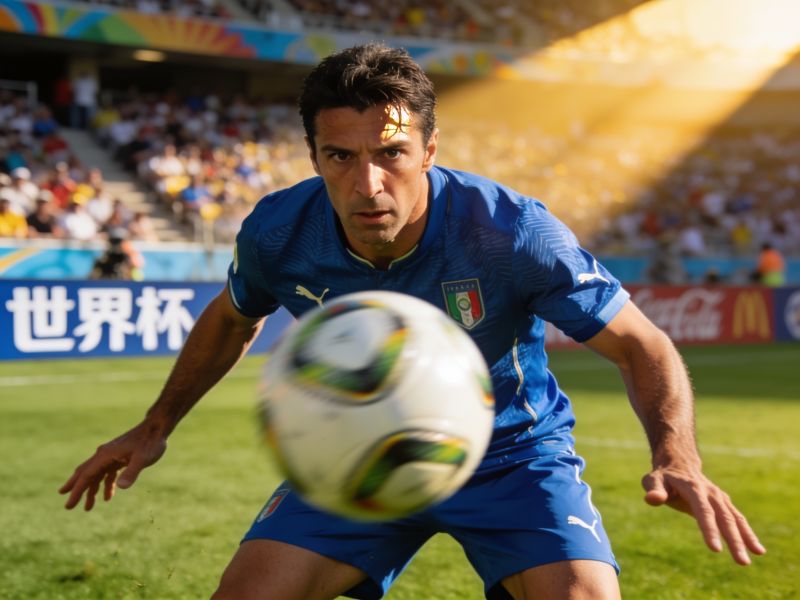
body angled, ready to intercept. That economy of movement masked a fierce competitiveness. He once said he preferred marking Ronaldo to anyone else because the Brazilian forced him to think two moves ahead. When Cannavaro won the Ballon d'Or in 2006—the last defender to do so—it felt less like a sentimental award and more like recognition of a singular skill: the ability to defend without fouling, to win duels with timing rather than force.His club career followed a less celebrated arc. The Napoli native made his name at Parma, forming a formidable partnership with Lilian Thuram. Then came a difficult spell at Inter Milan, where injuries and a shifting backline exposed his reliance on a settled system. Juventus。before the Calciopoli scandal sent him to Real Madrid, was where he looked most comfortable. In Spain, age caught up with him, but he adapted, using positioning to compensate for fading pace. That adaptability is often overlooked. Cannavaro did not just rely on instinct;he studied opponents obsessively, keeping notebooks on strikers' preferred runs.Off the pitch, he carried himself with a quiet authority. Italy's 2006 squad was a volatile mix of egos—Totti, Del Piero, Gattuso—yet Cannavaro, as captain。rarely raised his voice. He led by example, training with the intensity of a fringe player. I remember a story from a friend who watched a Juventus session in 2005: Cannavaro stayed behind for twenty minutes practising headers against a machine, long after his teammates had gone in. That kind of unseen work explains why he was still intercepting passes at 35. It also explains why coaches trusted him in big matches, even when his legs were gone.Today, Cannavaro's legacy is secure but oddly understated. No defender has won the Ballon d'Or since, and few have come close. Yet he rarely tops lists of greatest defenders—perhaps because his game lacked the obvious drama of a Maldini tackle or a Baresi clearance. His was a quieter art: the step across, the nudge, the header that goes exactly where he wants it. For anyone who studies defending。Cannavaro remains the reference point. He proved that size is secondary to intelligence, that the best defenders control space rather than just bodies. That lesson still holds.